

How to Secure an SMSF Investment Property That Pays Itself Off in 13 Years

Investing in property through a Self-Managed Superannuation Fund (SMSF) is a powerful way to grow your retirement savings while building a portfolio. But what if your SMSF investment property could pay itself off entirely in just 13 years? A strategic property investment company can help structure investments that accelerate outcomes like paying off property within SMSF. Here’s how Liviti can help you achieve this with a strategically chosen property, ticking all the right boxes for smart investors.

What Is an SMSF?

A Self-Managed Superannuation Fund (SMSF) is a private super fund that you manage yourself. Unlike traditional superannuation funds, an SMSF gives you full control over where your retirement savings are invested, including the ability to purchase property. This flexibility can help you build wealth in a way that aligns with your goals, but it also requires compliance with strict rules set by the Australian Taxation Office (ATO).

Key features of SMSFs:

  • Control: You decide how your super is invested, whether in shares, property, or other assets.
  • Compliance: Investments must comply with ATO regulations, including the sole purpose test (benefiting your retirement savings).
  • SMSF Loans: Borrowing to invest in property is possible through a limited recourse borrowing arrangement (LRBA).
Couple looking at SMSF Investment Property due to their borrowing capacity being maxed out on other properties.

Why an SMSF Investment Property Is a Smart Choice

An SMSF provides greater control over your retirement savings and allows for diversification into assets like property. One of its biggest advantages is the ability to borrow within the fund, making it an ideal strategy for investors who are stuck after reaching their personal borrowing limit. If you’re at your borrowing capacity and looking to expand your portfolio, an SMSF can be the key to acquiring a third, fourth, or even additional properties without affecting your personal finances. Access to investment property loans for doctors can also support faster portfolio growth when aligned with long-term planning.

Investing in property through an SMSF allows you to leverage your super contributions to secure a tangible, income-generating asset. With the right property, you can enjoy positive cash flow, long-term capital growth, and tax benefits, making it the most efficient way to continue growing your portfolio and ensuring a secure financial future.

An SMSF Investment Property Opportunity at a Glance

How would you like a property that’s:

  1. Eligibility for SMSF investment, ensuring compliance with superannuation laws.
  2. A prime location, just 17km from Sydney’s CBD.
  3. Affordability, with a purchase price under $600,000.
  4. Positive cash flow, generating consistent income.
  5. A secure tenancy, as it’s already tenanted.
  6. A rental guarantee of 6% yield, providing peace of mind.
  7. The potential to be fully paid off within 13 years, leaving you with a debt-free asset.

The Financial Breakdown of a SMSF Investment Property

Here’s a real life example of our investment properties work to pay themselves off:

Property Costs

Property Price: $592,000

Additional Costs: $24,477

including conveyancing, stamp duty, valuation fees, and mortgage registration.

Total Costs: $616,477

Investment Breakdown: $142,877 (20% deposit plus additional costs), with a loan of $473,600.
Income and Repayments
Rental Guarantee: $683 per week, equating to $35,516 annually (6% yield).
Super Contributions: Based on an income of $120,000, your annual contributions of $13,800 (11.5%) are directed towards the mortgage.
Total Yearly Income: $49,316 (rental income + super contributions).
Mortgage Repayments: $33,152 annually, based on a 7% interest rate.
Surplus Cash Flow: $16,164 per year, which is used to pay down the loan principal faster.

How It Works

This combination of rental income and superannuation contributions creates a powerful strategy to fast-track your mortgage repayments. By applying the surplus cash flow towards the loan principal, the property is completely paid off in just 13 years, leaving you with a fully-owned asset generating consistent passive income for your retirement.

Why This SMSF Investment Property Makes Sense

  1. Leverage Your Super: Instead of relying solely on traditional super investments, this property allows you to diversify into real estate.
  2. Positive Cash Flow: The rental income exceeds the mortgage repayments, providing a surplus that accelerates your loan payoff.
  3. Long-Term Value: With a property located close to Sydney’s CBD, you can expect strong capital growth over time.
  4. Security: A rental guarantee and an already tenanted property ensure steady income from day one.
  5. Affordability: With a purchase price under $600,000, this is an accessible entry point for SMSF investors.

Is This Strategy Right for You?

Investing in property through an SMSF requires careful planning and adherence to regulations. At Liviti, our experts can help you determine if this opportunity aligns with your financial goals and retirement strategy.

Learn more about managing an SMSF investment property effectively

Ready to Get Started?

Achieving results like this requires a disciplined SMSF property investment strategy that focuses on both cash flow and debt reduction. Working with a property investment company like Liviti while understanding how self managed super fund property operates ensures your structure is optimised for performance and compliance over time.

Contact Liviti today to learn more about how a SMSF investment property can help you secure your future. Book a free discovery call with our team to explore your options.

What is rentvesting, and why are so many millennials and Gen Z deciding to rentvest?

The great Australian dream of home ownership has drastically changed. As property prices continue to rise, buying your dream home in your ideal location may no longer be within your budget.

Many first-time homebuyers face the challenging decision of whether to buy an investment property or a home. Both have many benefits, but how do you decide?

What if we told you there was a way to get into the property market? A strategy many millennials and Gen Z are taking advantage of right now?

Rentvesting has become a popular strategy amongst the younger generations, allowing them to achieve home ownership goals and build wealth without sacrificing their lifestyle. A property investment company like Liviti can help younger generations implement rentvesting strategies effectively.

What is rentvesting?

Rentvesting is the action of buying property in a more affordable location, renting it out to pay the mortgage, while then renting in an area where you would like to live.

How does rentvesting work?

A rentvesting strategy is buying an investment property first (where it’s affordable to buy) and renting where the person wants a home. This tactic is used to eliminate financial challenges and balance property price affordability.

Why Rentvest?

You’re probably thinking, why pay off a mortgage and rent simultaneously? Wouldn’t it be easier to buy a property to live in?

Well, it all comes down to your budget, life stage, and the lifestyle you’re looking for. For example, perhaps you’re single and want to get into the property market, but the home you want isn’t in your price range. Or maybe you’re happy with living in the city for the time being, even though you know that eventually, you’ll want to relocate to a bigger house outside the city.

You can have the best of both worlds with rentvesting. You can continue to rent the house where you currently live while purchasing a property and renting it out to offset some or all of your ownership costs. If your property is positively geared, you may even put the revenue from your investment property towards purchasing another property or boost your savings. Working with property investment advisors Sydney at Liviti ensures these strategies are aligned with long-term growth.

Types of rentvestors

Rentvesting has become very popular in inner city areas as it is less affordable for millennials and Gen Z to own property in these locations.

The types of rentvestors can be broken down into two groups of people:

  1. People who enjoy the inner-city lifestyle but cannot afford a property there. They will purchase a property elsewhere and let it gain value over time.
  2. People who constantly move around for work or their lifestyle. They will choose to buy a property for stability whilst living in rental properties that suit their current lifestyle or employment.

Why are more people rentvesting?

As property prices increase, it becomes even more challenging for young people to purchase property.

Many first home buyers in Australia’s major capitals can only afford to buy far from the city centre. But that can pose a problem for those who work in the CBD, grew up in the inner suburbs, or currently live in a trendy inner-city location.

Sure, you’ll still pay money in the form of rent. But you are in the market and living somewhere that suits your lifestyle.

Rentvesting is designed to be a temporary solution. But that doesn’t mean you shouldn’t continue to rentvest after one property. You can continue purchasing more properties until you build a strong portfolio! By then, you’re likely to earn a higher salary or be able to use the equity from your other properties to afford a property in your desired area.

If you’re lucky, your property value would have increased and paid off a chunk of your mortgage. You will be able to use some of the equity from your property investment to fund the purchase of your second property.

Pros and cons of rentvesting.

Pros of rentvesting

  • Rentvesting can help you buy a property sooner.

Since rentvesting lets you purchase property merely from an investment perspective, you could target considerably less expensive properties than your dream home, which means you don’t have to pay such a large deposit.

  • Increasing cash flow

Cash flow is the difference between an investment property’s rental income and rental expenses. You will likely increase your cash flow if an investment property is positively geared. This is due to the rental repayments received covering any maintenance costs, mortgage fees, interest payments and other expenses but will also provide extra cash for you to invest in other properties.

  • Potential Capital Gains

Suppose the value of your investment property rises. You can sell it later for a profit or use the equity for another investment property or home.

  • Low maintenance costs

You most likely won’t be accountable for any maintenance charges brought on by normal wear and tear if you’re a tenant.

E.g. in your rental property, depending on your conditions, your agent will arrange the repair if the hot water service is having problems. Whereas in your investment properties, you’ll be accountable for maintenance costs for that property. However, there are benefits to paying maintenance fees. They are tax deductible.

  • Tax benefits of rentvesting

Certain expenses on your investment property can be claimed as tax deductions outlined by the Australian Taxation Office (ATO). Some of these include:

  • Interest repayments on your loan; you still have to repay the principal, but the extra interest charges can be deducted.
  • Advertising to find new tenants
  • Bank fees and loan charges
  • Stamp duty
  • Legal expenses and land tax
  • Body corporate fees, cleaning costs, and council rates
  • Home, contents and landlord insurance
  • Repairs and maintenance.
  • Loan establishment fees
  • Lenders mortgage insurance (LMI) 
  • Mortgage broker fees (if you used one)
  • You can build equity in the home.

You can accumulate equity in a home without living there if it increases in value. While you continue to live in your preferred area, building equity in a property could make refinancing for a new loan or purchasing another property much simpler.

  • You don’t have to sacrifice your lifestyle.

Depending on your lifestyle needs and financial situation, you can choose where you want to live as a rentvestor. Maybe you’re closer to work or family or live near great amenities. It’s absolutely up to you what is most important.

Cons of rentvesting

  • Ongoing costs might be high.

As a landlord, you are often in charge of managing and paying for repairs to your property. Additionally, a leasing agent may want payment from you. You’ll also be responsible for covering your own rental expenses if your rental income is less than your ownership expenditures.

  • Potential capital loss

If your property decreases in value, you might have to sell it at a loss.

If you decide to sell your investment property, you’ll need to pay tax on capital gains.

Should I buy a home or Rent and invest?

Yes, just buying a property to live in has its benefits over rentvesting. The main advantage is that usually it can be cheaper than rentvesting, and you can move into your own home straight away, instead of renting. However, it can be much more expensive to buy in ‘desirable’ areas, such as those close to the CBD. In contrast, rent in these areas can be more affordable.

For example, If you were to rent an apartment in Burwood (NSW), your weekly rental would be around $510. Whereas, if you were to purchase an apartment in Burwood, you would spend $848k, and your weekly mortgage repayment would be about $998.

Rentvesting allows you to continue to live in the area you want and makes it easier to enter the property ladder quicker. This enables you to build a rental income and capital growth before selling to buy in a better location or move into it yourself!

How do I start rentvesting?

Before becoming a rentvestor, here’s what you need to think about before you start:

  1. Save a deposit:

    In general, the greater your deposit, the better. You’ll need to borrow less money against the property, which will result in lower interest rates, and you’ll also be able to avoid paying an LMI. A larger deposit can also improve your chances of getting approved by lenders. However a 5% deposit which most off-the-plan developers accept, is a great entry point into the market and is quickly achievable.

  2. Research the different markets:

    Doing your research is essential, primarily when covering all the factors a suburb might have. For example, schools, public transport, bars, shops, cafes etc. As well as the potential for growth in the area.

  3. Think Long-term:

    Rentvesting works best when the location has the potential for long-term capital growth or it is a place you want to live in the future. This is why you shouldn’t stress if you don’t make any profits straight away, as it can take time for results to show.

  4. Be aware of the extra costs.

    Owning a property isn’t free. The extra costs we covered earlier, loan costs (e.g. home loans), property management and maintenance costs can be expensive year-to-year. You must factor these costs into your budget and set aside money to pay for any emergency expenses that might pop up!

Rentvesting allows flexibility while building assets, particularly when supported by investment property advisors Sydney at Liviti who understand changing lifestyle priorities. Engaging a property investment consultant Sydney alongside a property investment company ensures these strategies are structured for both short-term adaptability and long-term wealth creation.

Do you think rentvesting is a great option, or are you still on the fence or want to learn more about this investment strategy? Speak to one of our property experts now!

Financial Planning For Property Investments 101: Proven Ways To Accomplish Your Property Goals This Year With The Right Plan

Now that we’ve entered a new financial year, the Liviti team has decided to help you make the most of this financial year by maximising your property goals and helping you conduct financial planning for property investments! Whether you’re looking for an investment property or buying your first home, we’ve got you covered!

Whether it’s a discussion about buying a family home or building a property portfolio, the steps to successful investing remain the same. You need to understand why you are investing or purchasing, how it is going to meet your needs, and what (if any) compromises you will need to make to get there. Being clear on the answer to “why” lays the foundation for determining the best steps on “how” to do it.

So, where should you start?

financial planning for property investments

Evaluate your goals that align with your financial planning for property investments

The first thing you need to do to conduct a financial planning for property investments is to set a goal. A financial goal should always be reviewed after being set. You should set aside time to reflect on your accomplishments and failures. Look at what’s possible and give yourself time to reflect on why. Using this information, you may evaluate the amount of money you spend on achieving those objectives and find holes in your planning strategy.

By going through these processes, you can determine what goals are realistic and what might take longer to achieve.

What should I do if I don’t have a plan or goals?

It’s essential for those starting to establish their financial goals in advance. Consider using the SMART method, which is used for setting achievable goals. SMART stands for Specific, Measurable, Attainable, Relevant, and Timebound; it will help you identify your goals when defining a goal and will come in handy when starting your financial planning for property investments. Additionally, your objectives must be achievable, realistic, and time-based.

It may be challenging to map out your goals at first, but an excellent way to group your goals is by creating short-term, medium-term, and long-term objective lists. Identifying these various goals is important, especially when planning Longer term goals. Long-term goals can have long-term value, and they should be assessed over a specific time frame.

For example,

  • A short-term goal might be saving up for a holiday or entertainment system.
  • Medium-term goals might include saving a 20% deposit for a property, saving for a wedding, or preparing your finances to start a family.
  • A medium-to-long-term goal might be planning an investment property strategy with one of Liviti’s expert investment strategists.
  • A long-term goal might be buying a property investment for a secure financial future and might just be the thing to properly start your financial planning for property investments.
how to conduct financial planning for property investments

Assess your saving goals.

Over time, the goal to save can be adjusted or changed to your circumstances . Unlike short-term goals, like saving for holidays overseas, your focus should now be on longer-term objectives, like buying a home or an investment property in the future. Make sure you know how much your savings goals will change if you are working towards your goal in a year vs 5 years.

An excellent way to map out your saving goals is by creating a spreadsheet outlining your income and all expenses; this is an excellent resource for setting your saving goals.

Check your superannuation

Although you may not have thought about it all the time, it can be an interesting factor to consider in your financial year plans. Whether you’re planning your retirement or you’re new to the workforce, your finances should be balanced to prepare for the future. This will later prove to be an asset when you start your financial planning for property investments.

This is also beneficial when buying a first home as it’s possible to use some of your super to go to buy your first home through the First Home Super Saver Scheme (FHSS). You can even use a Self Managed Super Fund (SMSF) to help purchase a property.

financial planning for property investments 101

Buying your first home as part of your financial plan

We know buying your first home can be challenging. We’ve compiled a few things that should be included in your financial planning for property investments.

Check your credit score.

The lender can tell what kind of borrower you are based on your credit history and score. The greater your score, the more likely a lender would approve your loan application. Some lenders offer loans to borrowers with ordinary scores but at a higher interest rate.

Aim to reduce debt 

Debt is more common than you might think! According to Suncorp Bank, debt is one of the biggest money-saving roadblocks.

The best strategy for tackling your debt is to list all your debts (yes, it includes Afterpay and PayPal!) and how much you still owe. Then move on to prioritising your debts and planning which ones you should pay off first. A smart way of paying off your debt is to start with the debts with the highest interest rates and fees (personal loans & credit cards). This should help you save more in the long run!

Another way to reduce your debt is to switch your credit card for a debit card; it helps limit your spending to what you have, whilst helping you dodge interest and annual fees that come with credit cards!

Adding an investment property to your financial plan

Understanding your property’s true cost is crucial when investing in real estate as part of your financial planning for property. One aspect of the cost of owning an investment property is the interest expense. Though, other related expenses also need to be considered, including rates, maintenance, capital improvements, property management, and strata. Property investment calculators can help you build a structured financial plan for property investing. Using a borrowing power calculator ensures your strategy aligns with your financial capacity.

Investment Property Tax Benefits

One benefit of investing in property is that there are several specialised tax deductions you can choose to claim, which include;

  • Fees for repairs and maintenance
  • Interest charges on your home loans; some upfront costs, such as establishment fees, stamp duty, and Lender’s Mortgage Insurance (LMI)
  • Home insurance
  • Strata fees

Why your financial planning for property investments should include buying an investment property

  • It can minimise your tax return.
  • Secures an early retirement
  • Supplement your super with property
  • Pay off your mortgage sooner & reduces your debt
  • Have financial freedom
  • Build out your passive income

The benefits of an investment property far outweigh the costs associated with them, as you’re likely to make a higher return from the investment in the long run.

Effective planning requires clarity around budgeting and financing, which is where a budget planner and property investment loan calculator provide valuable guidance. Property investment calculators help you align your financial plan with long-term investment success. With these tips and tools added, you’re finally start your financial planning for property investments.

Getting a glimpse of where you stand right now and assessing your financial goal regularly will allow you to increase your quality of life through tactical investments and tax planning strategies.

Don’t know where to start? Our investment property strategy experts are here to help you every step in your property journey!

The Best Investment Property Sydney Guide: How to Navigate the Market for Success

There has been a lot of activity in Sydney’s property market in May! Our borders have finally reopened, we had our Australian Federal Election, our vacancy rates are low, rental income high, and interest rates are forecasted to rise…

Australians are falling back on real estate as a safe haven in these times of uncertainty. They are hungry for real estate and Sydney’s property market is experiencing a surge in buyer demand (and property prices).

This begs the question – is this a good time to invest?

If you want to learn whether Sydney property investment is hot or not, READ ON.

Investment Property Sydney Guide - (Source: Johnny Bhalla) Image of Sydney Opera House

Sydney – The Capital City

Sydney is Australia’s largest capital city. It is brimmed with beautiful beaches, superb parklands, and an abundance of economic opportunities.

Sydney is attracting people from across the globe and it’s not just because of the spectacular harbour bridge views or the koalas at Taronga Zoo.

Sydney is perfectly located on Australia’s south coast, and enjoys a perfect sunny climate, with mild winters and warm summers, where residents can always make the most of the outdoors. Sydney is also Australia’s safest city, ranked the 5th safest in the world according to The Economist Safe Cities Index. To top it off, Sydney is economically successful, with a dense network of competitive industries, infrastructure developments, and outstanding job opportunities. After the pandemic lockdowns, Sydney rebounded with 1.7% economic growth.

No wonder Sydney is attracting so many property investors!

(Source: Jamie Davies) Aerial image of Sydney

Why Sydney Investment Properties Are Booming?

When you picture property investors, you probably think of someone in a suit, looking smart and sharp. But ANYONE can invest in property. Sure, it takes time, but in the long run, it pays off, and as your skills and experience grow it definitely gets easier.

An investment property buyers agent at Liviti can help navigate the complexities of investing in the Sydney market.

First-time investors – listen up! There are SO many reasons why you should invest. And for those who already invest, here’s why you should continue!

Consistent & High Capital Growth

Residential property, especially in a capital city, has a track record of producing high and consistent long-term capital growth. If you’re an investment rookie, capital growth simply refers to an increase in the value of an asset or investment over time.

According to CoreLogic, Sydney’s house prices have more than doubled over the past 10 years, rising 146.4%! Since properties are increasing in value when you sell you will benefit from capital gains.

In short, investment properties are a safe venture that will bring you more dough!

Growing income

The rental income you receive from investment properties allows you to borrow finances and enjoy the benefit of leverage, allowing you to earn a safe, passive income that continues to grow over time. As demand for rental accommodation increases and the percentage of tenants rises, there are plenty of opportunities for investors to make a good income in residential property investment. Make room for ‘Generation Rent!’

Awesome security

Have you ever heard of a house going broke? Nope, neither have we. Residential property is a tangible asset and secure investment that you can insure against most risks. According to CoreLogic head of research, Eliza Owen, in comparison to equities, “property is less volatile and slower to respond to market shocks”. The property doesn’t crash overnight as shares do. So you can sleep tight with the stability of the property market, with its continued growth over the past decade. Phew!

You are in the driver’s seat

Who doesn’t love being in control? When you invest in property, you make all the decisions and have direct control over the returns you make. If your property is not producing good returns, you can simply add value. Adding a lick of paint or organising refurbishments and renovations can make it more desirable to tenants and boost the property’s value. YOU can influence your returns, just by meeting the needs of your tenants (or future tenants).

It’s easy to get into the property market!

Thankfully, you don’t need to be a millionaire to invest. Banks will lend up to 95% against the security of residential property – so most ordinary Aussies with a steady job and a little capital can invest. It’s easy to get into the market – so what’s stopping you? A buyers agent investment property approach ensures decisions are aligned with both market conditions and goals.

Sydney Property Market Performance

There’s been HEAPS of activity in the Sydney market!

According to Domain’s latest Rent Report, buyer demand in Sydney has increased by 9.1%! Unit rents have increased by $30 over the year, to a median of $514 in May – the sharpest annual increase in 8 years. Sydney’s rental market is also now the third most expensive for houses, with median weekly rent reaching $804 in May.

SOURCE: SQM Research. Sydney Weekly Rents

HSBC chief economist for Australia and NZ, Paul Bloxham, stated that “The Melbourne and Sydney housing market had stalled since the beginning of the year.”

However, with low vacancy rates, high demand for property, constant price growth, and low rental yield, the past year has been a whirlwind in the Sydney property market. The domestic and international borders have finally reopened, welcoming international students, Australian residents, and travellers into the country and sending rental demand through the roof. With all this, the supply of available properties simply cannot keep up with demand.

Plus, interest rates have risen for the FIRST time in over a decade, increasing rates of returns for investors. According to Property Update Australia, Sydney property prices remained flat at the beginning of May and are up 14% over the last 12 months. Affordability constraints remain, even though Sydney house prices are expected to drop. Currently, the median house price is $1.8 million with a rental yield of 2.29%, and a current vacancy rate of 2.77%. For units, the median price is $900k, with a 3.38% median rental yield.

Liviti’s Top 5 Suburbs to Invest in Sydney

Liviti has compiled the best Sydney suburbs for investors:

1. Villawood

Villawood is a quiet, safe family friendly suburb situated in the heart of Sydney’s southwest. It has plenty of green space for dogs and kids, with several parks and reserves such as Kincumber Oval Nature Reserve. Investors can expect great returns from Villawood properties, as the rental yield for units in May was 4.6%, and 3% for houses, with a low vacancy rate of 1.3%.

And there’s even more good news – A renewal project to transform Kamira Court into a vibrant, new mixed housing community in Villawood has commenced! The renewal is expected to bring the awesome community and transport infrastructure with trains, buses, roads, and a new 3000 square metre park for residents. This definitely boosts the value of the Villawood!

V1 Villawood

Liviti’s V1 Villawood project has an average rental yield of 4.8% for 2-bedroom apartments, the top yield out of all our projects! With key suburbs and amenities all within an 8km radius, the V1 apartments are perfect for your future tenants. Plus, they are complete and ready to move in!

Image of V1 Villawood Apartments

2. Parramatta

Parramatta has exciting opportunities for investors. There is no wonder why it has been dubbed Sydney’s second CBD, as it has become a central hub for education, entertainment, culture, and art. Its fabulous amenities allow for easy urban living, with commercial shopping strips and dining of almost every cuisine you could think of. The rental yield for units is 4%, and 3.3% for houses.

Construction is thriving in Parramatta, with many recent developments that have been turning heads. The $2.4 billion Parramatta Light Rail between Westmead to Carlingford is expected to open in 2023, bringing heaps of benefits to all. NSW Government will also deliver a five-kilometre walking and bike riding path, urban design, new bridges, and road network upgrades.

(Source: Infrastructure Magazine) Image of Parramatta Light Rail

Paramount on Parkes Parramatta

Paramount on Parkes offers 1, 2, and 3 bedroom apartments, perfectly positioned to allow close proximity to schools, retail, dining, transport, and parklands. Its top of the line inclusions and great communal amenities allow for enjoyable, convenient living.

3. Kogarah

Kogarah is the beating heart of the St George Region and is said to represent one of the best-value suburbs in inner Sydney. Kogarah has great transport, health, and safety, offering something for everyone. The rental yield is 3.5% for units, 2.7% for houses, and the vacancy rate is 1.8%. It is a hotspot for educational facilities and provides heaps of housing types with relative affordability.

Construction of the M6 Motorway has begun, which will consist of twin tunnels linking the M8 Motorway at Arncliffe to President Avenue at Kogarah, with new shared cycle and pedestrian pathways. This will boost the connectivity of Kogarah and to the surrounding areas of southern Sydney and increase the value of the suburb.

Premiere Kogarah

Premiere Kogarah delivers style, value, and convenience, with modern interiors and close proximity to transport and local amenities. The apartments are minutes away from Rockdale Plaza, St George Hospital, and Kogarah Public School, with lively cafes and shops for all your needs. It even has a communal rooftop entertaining terrace for your Saturday barbecues!

Image of Premiere Kogarah Interior

4. Fairfield

Fairfield is one of the best suburbs in Sydney for young professionals who want to enjoy the convenience of public transport to all business hubs in Sydney. Residents in Fairfield enjoy a great variety of public transport, and there are plenty of nice cafes and parks to visit. The median unit yield for apartments is 3.7% and 2.6% for houses, with a vacancy rate of 1.7%.

There have been several redevelopments in Fairfield that your tenants will love. Aquatopia Water Park Wave Pool and Koononna Park are complete, turning up the excitement factor of the inner west.

EVO Fairfield

EVO Fairfield offers luxury studio apartments close to Western Sydney parklands, Westfield Parramatta, and 5 mins to the train station. With prices starting from $375k, EVO brings style and innovation to life, complementing the ongoing transformations of Fairfield.

Evo Fairfield

5. Granville

Granville is a lively and multicultural suburb with great dining options and amenities. It is home mostly to 20-39 year-olds and has a vacancy rate of 1.7%, with rental yields of 4.3% for units and 2.8% for houses. Granville offers an abundance of Lebanese food and is close to Scram Escape Rooms and the Rosehill Gardens Racecourse for those who crave a bit of entertainment.

Construction is bound to commence on the Merrylands Town Centre Infrastructure Upgrade. Stormwater drainage infrastructure replacements, new roads, and other utility upgrades across Merrylands CBD are set to revitalise the region, boosting activity in Granville.

Granville Place

Granville Place apartments are complete and ready to move in, offering 1,2, and 3-bedroom apartment options with premium appliances. The apartments have a ground floor shopping centre and are extremely close to Parramatta CBD and a new public park.

Become an investor today!

Sydney presents both opportunity and competition, making guidance from an investment property buyers agent essential. Working with a buyers agent for investment property provides access to local expertise, while an investment buyers agent Australia supports strategic portfolio growth.

If we’ve piqued your interest to invest in property in Sydney, New South Wales, Contact Liviti Today and let us guide you on your property journey.

Sunset Cause: What, Why, Who, When & How?

Buying property can be stressful if you go on the journey without guidance. Financial and emotional investments are at stake, and there are a lot of things that can go wrong. For that reason alone, it’s unlikely to come across a real estate article that does not mention the importance of research for buyers.

Whether you’re buying your first home or an investment property, It’s essential to know everything listed in the contract of sale and how it might affect you. A property investment company like Liviti can help you understand complex contract clauses like sunset clauses.

Here, we look at the sunset clause for off-the-plan properties, its risks, and how you can make it work for you.

What is a Sunset Clause?

Sunset clauses are contract terms that effectively limit the time during which a contract remains valid. If the settlement has not taken place by the end date specified in the clause, both parties may walk away from the agreement. The buyer would receive their deposit back in full in such a scenario. Essentially, the sunset clause protects buyers from financial exploitation.

An average sunset clause period is around 18 months for off the plan sales. In some cases, the sunset clause deadline can be extended after being agreed upon after seeking legal advice.

The sunset clause is intended to provide security and protection for the buyer! In this article, we’ll explain what sunset clauses are, what they do, how they protect you (the buyer), what to watch out for, and how the most recent legislative changes affect you.

real estate, homeownership, homebuying

Why are Sunset clauses used?

The contract sunset clause is designed to protect the buyer and/or seller by letting either party walk away from the contract if the agreement requirements are not met by a specific date.

Sunset Clause when buying off the plan property

Sunset clauses are always included in off-the-plan property contracts. In this context, the clause states the date the developer must complete the project. It also states that if the property isn’t completed by the agreed-upon date, the buyer is legally entitled to walk away from the contract and receive their full deposit back.

Usually, the project is finished well before the date outlined in the clause, as developers exaggerate the time frame. This allows for delays either caused by weather, supply issues, or industrial actions.

For example, a contract between both buyer and developer would stipulate when the developer must finish the project – let’s say 16 August 2022. In scenario one, the deadline date would come around, and the developer has completed the project, so the sale & settlement can be finalised. But in scenario two, the buyer may find that the developer hasn’t met the sunset clause obligations and the project wasn’t completed by the deadline. The buyer decides to terminate the contract or extend it if that is an option for them.

Who do sunset clauses apply to and when can they be used?

The use of the clause is open to both the buyer and the seller, and either party can choose to invoke the clause if the expiry date has passed.

However, in some cases, the clause may be more challenging to invoke for one party than the other. In some states, legislation has been passed to make it more difficult for developers to invoke the sunset clause.

There were instances in the industry where some developers used the clause to purposely stall development until after the sunset date had passed so that they could relist the property for a higher price after the date had passed. This can no longer happen with the newer legislation in place.

How do sunset clauses help sellers?

The sunset clause benefits both the buyer and seller regarding the construction of new properties.

A developer can use a sunset clause if the delays are genuinely out of the builder’s control. Suppose there are time limits that are generally out of their control. In that case, they can be released from their buyer without any legal implications.

Can a sunset clause be extended?

Yes, they can. It is possible for the parties involved to reach a mutual agreement to extend the term of their current sunset clause. To do this, legal advice should be sought before extending the sunset clause. The clause will continue on the new agreed-upon timeframe of completion.

However, if new requirements for the contract still haven’t been met, both parties would have the option to invoke the clause and walk away.

contract, legal

How do Sunset clauses benefit the buyer?

Despite the recent negative media around sunset clauses, they can work in your favour as the buyer. The clause is a valuable get-out-of-jail-free card that you can pull out of your pocket when deadlines are missed.

Compared to many House & Land Contracts that shift all risk onto the buyer, this sunset clause is there to protect you. In this instance it is the protection of time and deliverability, but it also locks in your purchase price without the developer being able to ask for more money. In the case of House & Land, many contracts are written so the builder can force the buyer to pay more as costs increase over time.

Working with a property investment consultant Sydney at Liviti ensures these risks are properly assessed.

Before you sign a contract for an off-the-plan purchase, you should always speak with your solicitor to read the clause and also assess your personal situation to ensure the timeline suits you should the project be delayed until the given sunset date.

risk, word, letters

Sunset Clause Legislation

Due to the widespread abuse of the Sunset Clause throughout the states, new legislation has been implemented to protect buyers buying off-the-plan property.

A few states of note are;

NSW: The New South Wales government created a legislation amendment known as ‘Conveyancing Amendment (Sunset Clauses) Act 2015’ and is quoted as the below:

An Act to amend the Conveyancing Act 1919 to prevent a developer from unreasonably rescinding an off the plan contract for a residential lot under a sunset clause.

VIC: The Victorian government followed NSW’s lead. In 2019, they updated their legislation to close the loophole that previously allowed developers to exploit these clauses by intentionally delaying building projects to influence buyers. This is known as the ‘Sale of Land Amendment Act 2019’.

ACT: In 2021, The ACT government created the legislation, a blend of VIC and NSW laws, to better protect home buyers. These changes included an obligation to give buyers a 28-day notice of intent to revoke a sale, to which the buyer must consent. This is known as ‘Civil Law (Sale of Residential Property) Amendment Bill 2021’.

Even though state governments are trying to stop buyers’ financial exploitation, unfortunately, the Queensland government is yet to catch up with any sunset clause legislation updates. In recent months, Queensland’s property laws have come under fire as more developers use sunset clauses to cancel contracts and leave would-be first home buyers priced out of the market.

binding contract, contract, secure

Luckily, there is some good news! Queensland Attorney General Shannon Fenitman stated that Queensland’s property rules are now under review. “We are rewriting the entire Property Law Act right now in Queensland [and] it’s been a long time coming,” Fenitman said. Fenitman hopes to have this legislation in the Queensland parliament at the end of this year.

house, key, property

What does the new legislation mean for buyers and sellers?

Developers now need to provide buyers with a 28-day notice and an explanation of why they cannot meet their contractual obligations. A seller needs to specify why the completion of the project cannot be completed as the clause stipulates.

Suppose a buyer disagrees with the developer. In that case, the seller will need to obtain an order from the Supreme Court to revoke the sunset clause. They are now liable for any legal fees they may encounter. This means a developer can no longer cancel a contract if the timeframe outlined is not met in the sunset clause.

This is excellent news for buyers! As it adds extra security for buyers, knowing that the developer has to comply with the new legalisation.

Final Thoughts

When purchasing a new property, you need to do your research, not just of the developer.

Sunset clauses can have significant implications if not understood correctly, which is why guidance from property investment advisors Sydney at Liviti is essential. Engaging investment property advisors Sydney through a property investment company helps ensure contracts are reviewed with both legal awareness and strategic intent.

Lucky for you, we have done all the hard work for you and can provide all the information you need to make an informed decision.

Contact us today to Get Started!

Liviti’s tips to making the most of EOFY

As the End of the Financial Year (EOFY) approaches rapidly, you could enjoy a cash boost if you know what to include in your tax return. We’ve put together a checklist to maximise tax time benefits!

We know that declaring taxes can be overwhelming and confusing. Investment property calculators can help you optimise your financial position at the end of the financial year. To make your life a little easier, we’ve created a guide to help you.

People often fail to realise that their income does not always depend on their employer or regular income. Some other sources of income that are sometimes overlooked are:

  • Lump sums
  • Termination payments 
  • Bank interest earned
  • Dividends 
  • Employee share schemes
  • Rental income
  • Capital gains 
  • Cryptocurrency gains 

So why is it important to factor in all forms of income? It is important to declare all income streams as the ATO will ask you to pay your outstanding tax liabilities plus interest on late payments and any other penalties you may have. Using an income gross up calculator provides clarity on your overall income position.

Now that we’ve covered what streams of income you should declare, let’s move on to what you’re really here for – tax deductions.

Deductions can be one of the most confusing and debated areas of tax returns. Deductions can be expenses you’ve paid, though are not being reimbursed through your income. These might include: 

  • Home office expenses – furniture, lighting, stationery etc 
  • Self-education and professional development
  • Tools, equipment, uniforms, protective clothing
  • Work-related deductions – public transport costs, petrol costs  
  • Investment income, expenses, such as margin loans and financial adviser fees 
  • Even donations above a certain amount!

Now, we covered a few items you might be overlooking when filing your tax return. Let’s explore how Covid has affected your tax return and what you could include to maximise your tax return this year!

How do the impacts of Covid-19 affect the Financial Year?

Since Covid-19 has shaken up routines and how we work, the ATO has made it easier to claim deductions that reflect our new working environment. Some of these home office expenses include:

  • Phone and internet
  • Cost of heating, cooling and lighting of the office space
  • Printing and stationery 
  • Equipment – laptops, monitors, keyboards, mice, printers and furniture 


So does owning a property impact your tax return?

One benefit of investing in property may allow you to claim several specialised tax deductions you can choose to declare, which include; 

  • Repairs and maintenance fees 
  • Interest charges & upfront costs on your home loan – such as establishment fees, stamp duty and Lender’s Mortgage Insurance (LMI)
  • Home insurance 
  • Strata fees 
  • Negative Gearing: If your property is negatively geared, you can offset your loss against other taxable income, such as your salary, to reduce your overall taxable income for that year. Despite your loss in principal, your home should still increase in value over time, meaning you could still profit from selling it.

Your property is positively geared if you earned more income than you spent on expenses in the financial year. In this case, you may be subject to tax on your property income. But if you spent more on fees than you received in revenue, your property could be negatively geared, which would reduce your taxable income. 

Some property investors choose a negative gearing strategy to help them enjoy tax benefits in the short term and count on the property’s capital growth to make up for losses over a longer period. 

Other things you should consider when maximising tax returns on investment property are:

  • Capital improvements you’ve made over the financial year
  • Selling a poorly performing investment that no longer meets your needs to offset the capital gain from an investment you made during the year. In addition to triggering a capital loss, you may also be able to invest in new investment opportunities, allowing you to reduce your tax liabilities.

Maximise your tax return with these tips above. Making the most of your yearly tax return can help you reach your goals sooner, whether saving for a property or paying down debt.

EOFY planning requires accurate tax insights, which is where an income tax calculator and income tax calculator Australia become valuable tools. Investment property calculators allow you to structure your finances and maximise available opportunities.

Booking a Discovery session with us and we’ll tailor a property investment strategy to help you minimise your tax and maximise your tax return through these reductions. You can contact us to find out more! 

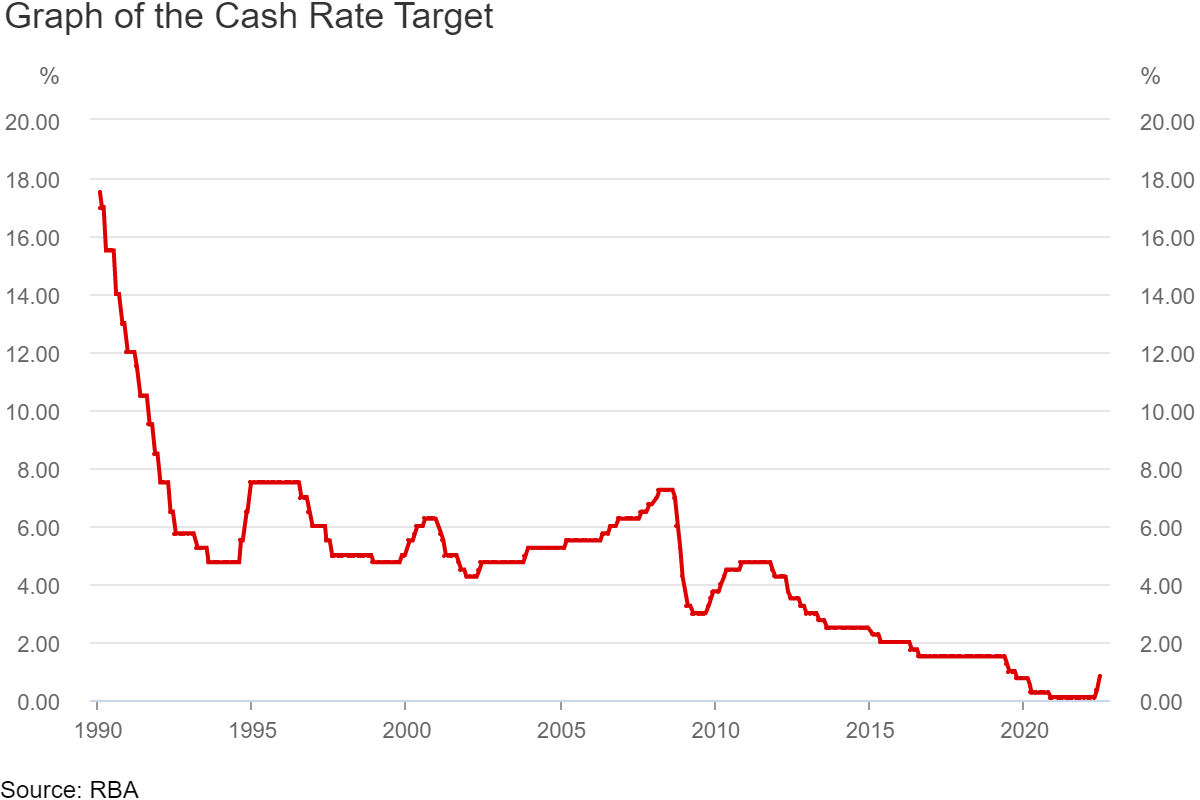
The Reserve Bank of Australia Increases the Cash rate to 0.85%

At the Reserve Bank of Australia’s June meeting, 07/06/2022, a decision was made to raise the target cash rate by 50 basis points to 85 basis points. 50 basis points also raised the interest rate on Exchange Settlement balances to 75 basis points.

Summary:

  • The cash rate has risen to 0.85% from 0.35% 
  • Cost to rent and cost of living will increase 
  • There are still opportunities for first-time home buyers!

In announcing the decision, Reserve Bank governor Philip Lowe said the rise was in response to the fact that “inflation in Australia has increased significantly”, even though it was lower than that of most other advanced nations.

“Higher prices for electricity and gas and recent increases in petrol prices mean that, in the near term, inflation is likely to be higher than was expected a month ago,” he said.

“As the global supply-side problems are resolved and commodity prices stabilise, even if at a high level, inflation is expected to moderate.

Further increases in inflation are projected this year, but the rate is expected to drop back to 2–3% next year. As prices continue to rise for electricity and gas mean that, in the short term, inflation is likely to be higher than was expected a month ago.

A property investment company can help you adapt to rising interest rates and their impact on borrowing. Working with property investment advisors Sydney at Liviti ensures your strategy adjusts to these changing conditions.

Before diving into further details of how these discussions at the Reserve Bank of Australia affect the future economy and property market, we should recap the economy over the last few months.

What has affected the economy over the past couple of months?

International Economy 

A brief overview of the international economy shows the ongoing conflict in Ukraine is increasing petrol and electricity prices throughout Europe. In addition to the cost of shipping goods and supply chain disruptions have increased inflation throughout the world. 

Domestic Economy 

The Australian economy has grown by 0.8% in the March quarter and 3.3% over the year, highlighted by an increase in business investment and a significant construction pipeline to be completed shortly.

Recent events – including Russia’s invasion of Ukraine, increasing inflation, natural disasters (flooding and bushfires), and growing tensions with China have caused the increase in inflation to be the highest it’s ever been in years, impacting the increasing cost of living and fuel prices across Australia. Furthermore, the ongoing supply chain issues increase these costs across the country.

The good news is that employment has grown, and the unemployment rate is at 3.9%, the lowest in almost 50 years! as conditions continue to strengthen, the unemployment rate is forecasted to decline to around 3.5% in early 2023.

However, there is some uncertainty on how this will affect household wealth and spending, given the increasing pressure on household budgets from higher inflation.

May’s Property Market overview 

Throughout May, the housing market conditions became more varied compared to previous months. Prices declined slightly in Sydney and Melbourne. However, in most other capital cities and regional areas, price growth remained strong, supported by a low number of properties for sale.

The rapidly changing inflation and interest rate situation has impacted the outlook for Australia’s housing markets, pulling forward and steepening the forecast price slowdown. Most economists expect the RBA to lift the cash rate to 2.25% by May 2023, a much earlier and more aggressive tightening than envisaged at the beginning of the year.

In the medium-term, property values will be linked to the extent to which our economic recovery post-pandemic affects; the economy, employment, borrowing capacity and credit availability. A few underlying long-term factors will have a knock-on effect on how the medium-term plays out. 

Let’s have a look at them

  • Population growth – Over the past two years, the population growth within Australia has slowed. However, this should increase as borders start to reopen and we have a wave of migration into Australia. For those who don’t know, the current forecasted Australian population growth rate is 1.3%. 
  • A decline in supply – Development project completions are expected to fall significantly short of the long-term demand for apartments due to the limited access to building materials and resources. We will see a continued undersupply of properties, particularly in our heavily populated capital cities.
  • Increase in renters – Nationally, CoreLogic’s Hedonic Rental Index increased 1.0% in May, pushing the annual change in rents to 8.8% across the combined capital cities.

Although housing prices have declined in some markets over recent months, especially in May, most remain more than 25% higher than before the pandemic. 

What does this mean for you?

PropTrack economist Paul Ryan stated that those aspiring first time home buyers would find the rising rates quite helpful to their home ownership goals.

“Firstly, housing prices, either growing more slowly than they have – and we’ve already seen that through this year – or even falling a little bit, tends to help first home buyers,” Mr Ryan said.

“Often first-time buyers are limited by how big a deposit they can save. So when the level of prices is high, saving 20 per cent of that level can become more onerous for them.”

Interest rates rising will have a knock-on effect on the rising costs to rent, this in hand with the declining vacancy rates, means it’s a good time to get your foot in the door.

Rate increases can affect both affordability and investor confidence, making it essential to engage investment property advisors Sydney who understand market cycles. Aligning your approach with an SMSF property investment strategy through a property investment company helps maintain long-term focus despite short-term fluctuations.

If you’re still uneasy about where or what to invest in, buying-off-the-plan is a great way to get in. 

So don’t be left behind. Act now!

What Happened to Davina’s $75 Million Listing on ‘Selling Sunset’

Netflix’s Reality real estate show ‘Selling Sunset’, Season 3 and all its glory came with its beautiful properties and suspenseful drama. 

However, do you recall Davina Potratz’s $75 million property? Wondering what happened, and if it’s sold yet? We were too! But first of all, let’s take a look back at this jaw-dropping property.

This property covers a whopping 1672 square metres of land. So you will definitely have more than enough room to unwind and relax. Talk about spacious living, privacy and personal space.

Davina Potratz's Property1

This modern mansion has a breathtaking interior with ambient lighting and spacious rooms. The dwelling of this vast property includes 7 bedrooms and 10 baths. Not to mention their very own separate guest house that has 2 bedrooms and 2 bathrooms. 

There is a perfect flow in the transition between indoor and outdoor living areas. Within the living areas, we can see a beautiful harmony between the kitchen, living and dining areas. The interior is elegant and lavish and is finished with a top-notch kitchen of course. 

Other features within the mansion of course include: 

  • Lavish owner’s suite
  • Walk-in closets
  • Movie theatre
  • GymWine cellar

Selling Sunset

It is also said this property has one of the biggest pools in all of Beverly Hills. Imagine taking a dip in this impressive pool any day, at any time, making this home the life of the party every summer.

Selling Sunset2

The backyard has luscious green grass areas and landscaping done – giving you enough space for when it comes to getting in your morning jog or getting a game of cricket going. Additionally, this outdoor area comes with an outdoor kitchen and dining area to relax and socialise in. 

Davina Potratz's $75 Million Property

Now the question that has been lingering in our minds. What happened to this property?

Well, it is actually still on the market! With the high price of $75 million in combination with COVID-19 lockdowns and restrictions, those with bigger budgets are not looking at the property market.  After all, $75 million is a very substantial amount of money to spend.

There was the previous talk of Davina speaking with a client trying to come to a mutual agreement for the listing. However, this was a year ago. Davina has since proven herself to owner of the home Adnan Sen by selling one of his properties for lease and redeeming herself and her reputation. 

Leaving the $75 million mansion property still up for grabs on the market.