
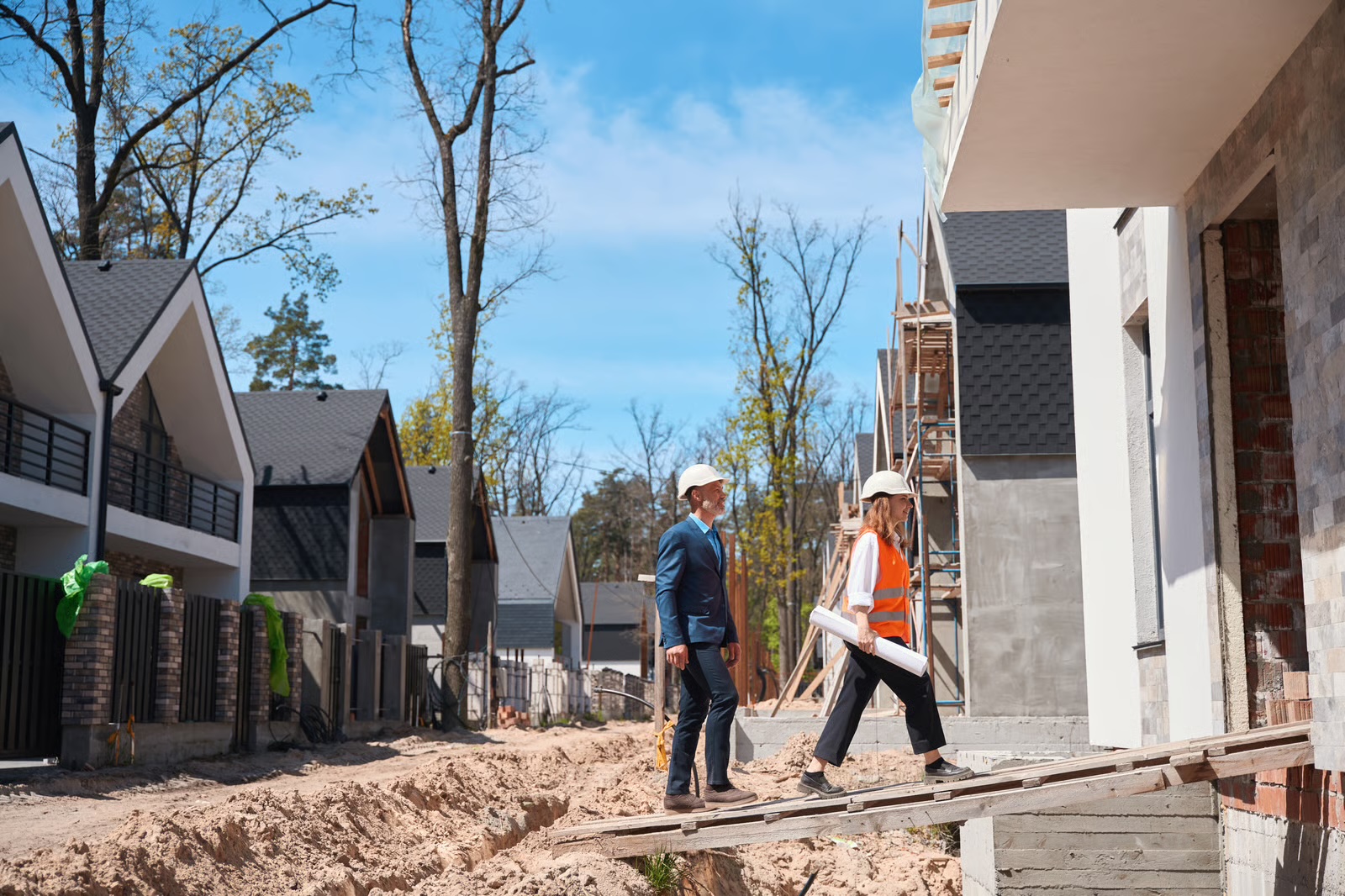
A new build gives you larger tax deductions in the early years. An established property usually gives you a proven location and more of the price in land. Which one suits you depends on your tax bracket, how long you plan to hold, and how carefully the location is chosen.
If you earn well above $190,000, the deductions on a new build are worth more to you than to most investors. That advantage only holds if the property sits in a location with real demand behind it.
The short comparison
New build | Established property | |
|---|---|---|
Building depreciation (Division 43) | 2.5% of construction cost a year, for up to 40 years | Only on construction after 15 September 1987, and only the remaining years |
Plant and equipment (Division 40) | Claimable on new fittings | Not claimable on second-hand fittings bought after 9 May 2017 |
Maintenance in the first years | Low, with builder warranties | Higher, depending on age |
Location | Often in newer estates | Often in established suburbs |
Land share of the price | Varies; check it before you buy | Usually higher |
Room to add value | Limited at the start | Renovation can add value |
Stamp duty | In some states, paid on the land only for a house and land package | Paid on the full purchase price |
Check stamp duty rules in the state you buy in, because they differ.
Depreciation: where new builds pull ahead
Depreciation lets you claim the decline in value of the building and its fittings against your taxable income, without spending any cash in that year.
There are 2 parts to it:
Capital works (Division 43). You can claim 2.5% of the construction cost each year for up to 40 years, for residential building work that started after 15 September 1987. On a $400,000 build, that is $10,000 a year.
Plant and equipment (Division 40). Carpets, blinds, appliances and air conditioning lose value faster, so they are claimed over shorter periods. Since 9 May 2017, you cannot claim these on second-hand fittings in a residential property you buy. That rule is the main reason new builds claim far more in the first years.
A quantity surveyor prepares a depreciation schedule that sets out what you can claim. Our guide to claiming property depreciation walks through the process.
Why your tax bracket changes the answer
A deduction is worth your marginal tax rate. For 2025-26, income above $190,000 is taxed at 45%, plus the 2% Medicare levy. At that rate, $10,000 of depreciation reduces your tax by about $4,700 a year. At the 30% rate, the same deduction saves about $3,200.
So the same new build does more for a surgeon or a business owner than for someone on an average income. You can estimate your own position with the tax calculator.
Where established property has the edge
Location. Established suburbs usually have transport, schools and jobs already in place. Some new estates are on the fringe, where those are still being built and where many similar homes may come to market at once.
Land value. Over the long term, much of a property's value sits in the land. An established house on a larger block in a sought-after suburb can have a higher land share than a new home in an estate.
Adding value. An older property can be renovated or extended to lift rent and value. A new build gives you less to improve for years.
When a new build suits you
You earn a high income and want to reduce the tax you pay each year.
You plan to hold for the long term, 5 to 15 years or more, not to renovate and sell.
You want low maintenance and less time spent managing repairs.
The location has real demand: employment, infrastructure and limited land supply, not just an estate that is selling fast.
When an established property suits you
Your priority is a proven suburb and the land that comes with it.
You are prepared to renovate to add value.
Your taxable income is lower, so depreciation is worth less to you.
What to check before you buy a new build
The land share of the price. Ask what the land alone is worth, and compare it with nearby sales.
Supply in the estate. Find out how many similar homes are planned, because heavy supply can hold rents and prices back.
The builder. Check the builder's licence, completed projects and warranty terms.
Build time and cash flow. You may pay interest during construction before any rent comes in, so plan for that period.
The rent estimate. Compare it with current rents for similar homes nearby, not with the developer's figure.
Plan your next purchase around the whole portfolio
You do not have to choose one type for good. The right next property depends on what you already own, your borrowing capacity and how long you plan to hold.
If you would like a view of your own position, book a strategy session. It is a 45-minute structured call that looks at your income, equity and goals, and maps out which type of property fits next. See how we work with high-income professionals.
Frequently asked questions
Is a new build or an established property better for investment?
Neither is better for everyone. A new build gives you larger depreciation deductions, which matter most if you are in a high tax bracket. An established property usually gives you a proven location and a higher land share. Choose based on your tax position, your time frame and the location.
How much depreciation can I claim on a new build?
You can claim 2.5% of the construction cost each year under Division 43, plus the decline in value of new fittings under Division 40. A quantity surveyor's schedule sets out the exact amounts for your property.
Can I claim depreciation on an established property?
You can claim the capital works deduction if construction started after 15 September 1987, for the years that remain. You cannot claim plant and equipment on second-hand fittings in a residential property bought after 9 May 2017.
Do new builds grow in value more slowly?
The location and the land share decide it more than the age of the home. A new build in a suburb with strong demand and limited supply can perform well. One in an oversupplied estate may not.
This article is general information only and does not take into account your personal circumstances. It is not tax or financial advice. Speak to a qualified tax adviser about your own situation.